



| Quantity: | |
|---|---|


Tribromoneopentyl Alcohol (Brominated R-324) is a reactive brominated flame retardant and chemical intermediate with a bromine content of ≈70% and hydroxyl group (-OH) reactivity. Unlike additive flame retardants, it covalently bonds with resin matrices (e.g., unsaturated polyester, polyurethane) via its hydroxyl group—ensuring permanent flame retardancy, zero migration, and excellent compatibility. With a melting point of ≈100℃ and solubility in common organic solvents, it is easy to integrate into resin synthesis or formulation processes. Its decomposition temperature >260℃ maintains stability during resin curing (typically 120–200℃), making it suitable for fiberglass-reinforced composites (FRP), coatings, and adhesive systems. Compliant with RoHS 2.0 and REACH SVHC, it is widely used in building materials, automotive composites, and electrical laminates where long-term flame safety is critical.
Brominated R-324’s hydroxyl group (-OH) reacts with isocyanate (in polyurethane) or carboxyl (in unsaturated polyester) groups, forming covalent bonds with the resin matrix. This integration makes it part of the polymer’s backbone, eliminating migration, leaching, or blooming—even in harsh environments (e.g., water immersion, high temperature). For example, in unsaturated polyester resins, it copolymerizes with maleic anhydride and glycols, ensuring bromine remains bonded for the composite’s entire lifespan (up to 20 years). This permanence is critical for products like boat hulls and building FRP panels that face long-term exposure to moisture.
With a bromine content of ≈70%, Brominated R-324 delivers powerful flame suppression. When bonded to resins, it releases bromine radicals during combustion that interrupt the combustion chain, while its branched molecular structure (neopentyl backbone) enhances char formation. This dual action enables unsaturated polyester FRP to achieve UL94 V-0 (1.6mm) with addition levels as low as 8–10%, compared to 15% for additive flame retardants. For example, FRP boat hulls with 9% Brominated R-324 resist ignition from gasoline spills and meet IMO Resolution A.653(16) (maritime fire safety standard).
With a melting point of ≈100℃ (easily melted in resin synthesis) and solubility in solvents like acetone, MEK, and ethylene glycol, Brominated R-324 integrates seamlessly into resin production. It can be added during polyester polyol synthesis (for polyurethane) or unsaturated polyester monomer mixing, requiring no additional processing steps. Unlike solid additive flame retardants that may cause agglomeration, its solubility ensures uniform bromine distribution in the resin—eliminating weak spots in flame retardancy. For example, in polyurethane foam synthesis, it is mixed with polyol components at 80℃, forming a homogeneous solution that maintains the foam’s cell structure.
Brominated R-324’s neopentyl backbone (branched, sterically hindered structure) improves the thermal and mechanical properties of cured resins. Unsaturated polyester resins with 10% Brominated R-324 have a glass transition temperature (Tg) of ≈110℃ (10℃ higher than pure resin) and flexural strength of ≈180 MPa (5% higher), enhancing durability for structural applications. In polyurethane coatings, it increases scratch resistance (pencil hardness ≈2H) and chemical resistance to solvents (e.g., xylene), making the coatings suitable for industrial environments.
Brominated R-324 has low toxicity (LD50 >5,000 mg/kg in oral rat tests) and emits minimal toxic gases during combustion—<30 ppm HBr (per ASTM D635-14) compared to 80 ppm for additive brominated flame retardants. It complies with RoHS 2.0 (no PBDEs, PBBs) and REACH SVHC (no listed substances), ensuring global market access. Its low volatility (vapor pressure <0.01 Pa at 25℃) also prevents worker exposure during resin mixing and curing.
• CAS Number: 36483-62-2
• Molecular Formula: C₅H₉Br₃O
• Molecular Weight: 324.84 g/mol (ensures high bromine density per molecule)
• Bromine Content: ≈70% (by weight, via titration)
• Functional Group: Hydroxyl (-OH) (reactive site for resin bonding)
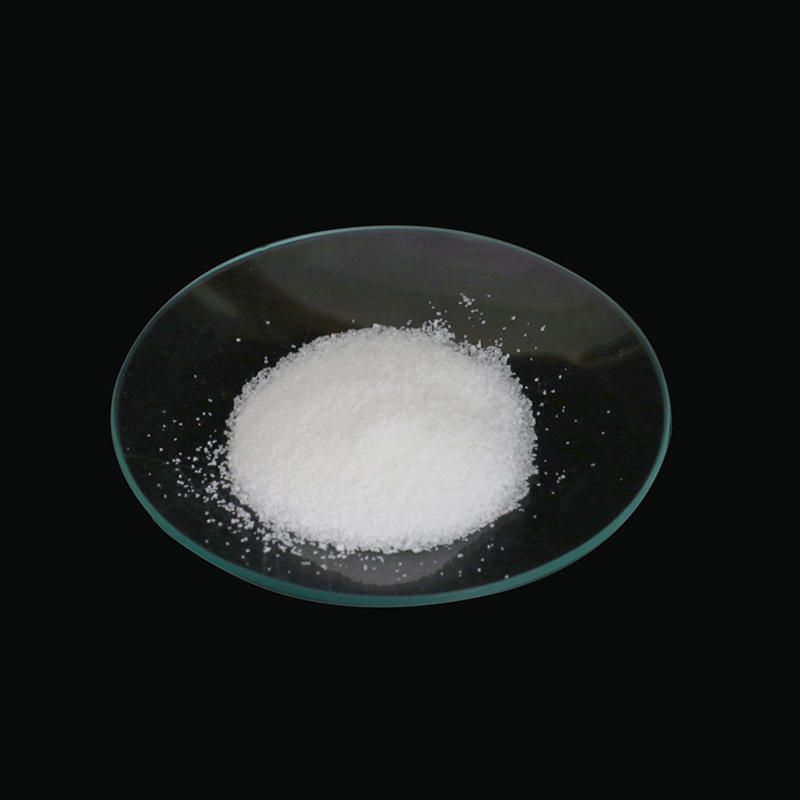
• Appearance: White crystalline solid (high purity, <0.5% impurities)
• Melting Point: ≈100℃ (range: 98–102℃, per ASTM D127)
• Decomposition Temperature: >260℃ (5% weight loss, TGA under N₂ at 10℃/min)
• Solubility: Soluble in acetone (200 g/L), MEK (180 g/L), ethylene glycol (50 g/L); insoluble in water (<1 g/L at 25℃)
• Particle Size: D50 ≈50–100 μm (easy to dissolve in solvents)
• Recommended Addition Level: 8–10% (unsaturated polyester FRP, UL94 V-0); 10–12% (polyurethane foam, UL94 HF-1); 9–11% (epoxy adhesive, UL94 V-0)
• Reactive Compatibility: Reacts with isocyanates (PU), carboxyl groups (unsaturated polyester), and epoxides (epoxy resins)
• Processing Temperature: 80–120℃ (for dissolution in resins; stable up to 200℃ during curing)
Brominated R-324 is a key component in unsaturated polyester FRP composites for boat hulls, building panels, and electrical enclosures. Adding 8–9% during resin synthesis enables FRP boat hulls to meet IMO A.653(16) (maritime fire safety) and resist gasoline ignition. For building FRP panels (e.g., exterior wall panels), it achieves GB/T 8624-2012 (B1 grade) and withstands UV aging (1,000 hours of xenon arc testing) without losing flame retardancy. In electrical enclosures, the FRP with 10% Brominated R-324 meets UL94 V-0 and provides electrical insulation (volume resistivity >10¹⁴ Ω·cm).
In polyurethane, it is used in rigid foam insulation (building, refrigeration) and flexible foam (automotive seat cushions). Rigid foam with 11% Brominated R-324 meets ASTM E84 (Class A fire rating) and has a thermal conductivity of ≈0.023 W/(m·K), maintaining insulation efficiency. For automotive flexible foam seat cushions, it complies with FMVSS 302 and retains comfort (indentation force deflection ≈300 N) while preventing fire spread. In polyurethane coatings (e.g., industrial floor coatings), it provides flame protection and scratch resistance, suitable for factories and warehouses.
Epoxy adhesives for electrical components (e.g., PCB bonding) use Brominated R-324 for flame retardancy. The adhesive with 10% of this flame retardant achieves UL94 V-0 and has a shear strength of ≈15 MPa (on aluminum substrates), ensuring strong bonding. In epoxy laminates (PCB substrates), it enables compliance with IEC 61249-2-21 and improves Tg to ≈130℃, suitable for high-temperature PCB applications (e.g., LED drivers).
As a chemical intermediate, Brominated R-324 is used to synthesize other flame-retardant monomers (e.g., tribromoneopentyl acrylate, tribromoneopentyl phosphate). These monomers are integrated into specialty polymers (e.g., acrylics, polycarbonates) for high-performance applications like aerospace composites and transparent flame-retardant plastics. For example, tribromoneopentyl acrylate synthesized from Brominated R-324 is used in acrylic coatings for aircraft interiors, meeting FAR 25.853 flame standards.


