



| Quantity: | |
|---|---|


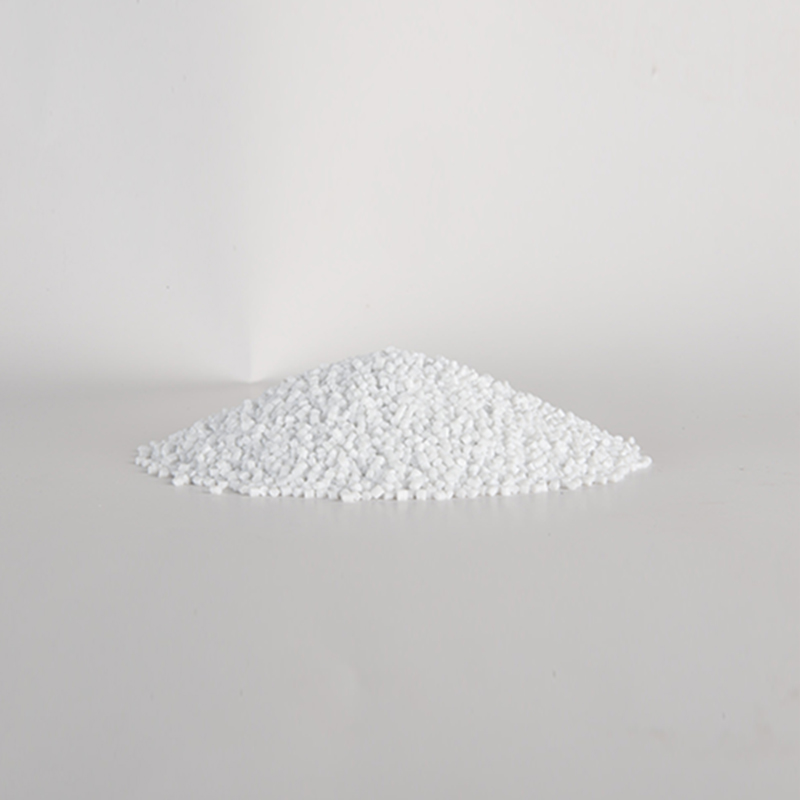
Decabromodiphenyl Ethane is a high-efficiency flame retardant distinguished by its ultra-high bromine content and excellent environmental compatibility. Engineered for flame-retardant formulations across diverse materials, it delivers robust fire safety performance while adhering to global eco-standards (e.g., RoHS, REACH). With a melting point of 345℃, it maintains stability during high-temperature processing, making it suitable for engineering plastics, wire & cable, pipes, and sheets. Its granulated masterbatch form (via twin-screw extrusion) ensures easy integration into production processes, simplifying manufacturing while enhancing material uniformity.
At the core of its performance is ultra-high bromine content, which rapidly inhibits flame propagation by disrupting the combustion chain reaction. Even at low addition levels, it enables materials to meet strict flame-retardant standards (e.g., UL94 V-0, GB/T 2408). This efficiency reduces the risk of fire spread in end products, such as electrical appliances or wire & cable, protecting lives and property. For example, in ABS plastic electrical appliance housings, Decabromodiphenyl Ethane prevents combustion even when exposed to open flames, limiting fire damage.
Compliant with global eco-standards (including RoHS 2.0 and REACH SVHC), Decabromodiphenyl Ethane contains no banned harmful substances (e.g., lead, cadmium, polybrominated diphenyl ethers). This compliance helps manufacturers avoid trade barriers in regions like the EU and North America, expanding market access. It supports the development of sustainable products, aligning with growing consumer and regulatory demand for environmentally friendly materials.
With a melting point of 345℃, Decabromodiphenyl Ethane remains stable during high-temperature processing (e.g., plastic extrusion, injection molding). It does not decompose or volatilize, ensuring the retention of flame-retardant properties in the final product. This stability also prevents the release of toxic fumes during processing, creating a safer production environment and avoiding contamination of end products.
Available as a granulated masterbatch (produced via twin-screw extrusion with nucleating and dispersing agents), it eliminates the challenges of traditional powder flame retardants (e.g., dust, poor dispersion). The masterbatch form mixes uniformly with base resins (e.g., PP, PE, ABS), enhancing material consistency. This uniform dispersion prevents weak spots in flame retardancy and improves the mechanical properties of the final product, reducing scrap rate.
Decabromodiphenyl Ethane matches the usage method and addition level of powder flame retardants, requiring no modifications to existing production equipment or processes. Manufacturers can switch from powder to granulated masterbatch without investing in new machinery or training operators, minimizing downtime and costs. For example, wire & cable producers can use the same extrusion lines to incorporate the masterbatch, maintaining production efficiency.
It offers customizable carrier options (e.g., PP, PE, ABS) to match specific customer formulations. This versatility ensures compatibility with different base resins, eliminating the need for additional compatibilizers. For instance, a manufacturer using PE for pipe production can select a PE-based carrier, ensuring seamless integration and optimal performance.
| Specification Items | Details |
| Chemical Information | |
| CAS Number | 84852-53-9 |
| Molecular Formula | C₁₄H₄Br₁₀ |
| Molecular Weight | 971.222 |
| Physical & Thermal Properties | |
| Melting Point | 345℃ |
| Form | Granulated masterbatch (optional powder form) |
| Formulation Compatibility | |
| Compatible Materials | Most plastics (PP, PE, ABS, HIPS) and rubber materials; no additional compatibilizers required |
Decabromodiphenyl Ethane is widely used in engineering plastics for electronics, electrical appliances, and lighting. In electronics, it is added to plastic connectors and component housings to prevent flame spread in case of short circuits. For electrical appliances (e.g., washing machines, televisions), it enhances the flame retardancy of outer shells, meeting safety standards like IEC 60335. In lighting, it is used in LED fixture housings, ensuring fire safety in high-temperature LED operation.
In wire & cable, it is a critical additive for insulation layers and sheaths. It prevents flame propagation along cables during fires, maintaining circuit integrity for emergency systems (e.g., fire alarms, emergency lighting). For power cables and communication cables, it meets standards like UL 1581 and GB/T 19666, ensuring safe operation in commercial buildings, railways, and data centers. Its uniform dispersion also prevents insulation breakdown, extending cable lifespan.
For plastic pipes (e.g., water supply and drainage pipes, gas pipes) and sheets (e.g., building decorative panels, industrial partitions), Decabromodiphenyl Ethane enhances fire resistance. In construction, flame-retardant pipes and sheets reduce fire risks, complying with building codes like GB 8624. For industrial applications, such as chemical plant piping, it also resists chemical corrosion, ensuring dual protection against fire and environmental damage.
It is compatible with rubber materials, used in rubber hoses, gaskets, and seals for automotive and industrial applications. For example, automotive rubber hoses near engines require flame retardancy to withstand high temperatures and prevent fire; Decabromodiphenyl Ethane ensures these hoses meet automotive safety standards (e.g., ISO 6722), protecting vehicle components from fire damage.
Yes, it is suitable for wire & cable insulation layers and sheaths, meeting UL 1581 and GB/T 19666 standards.
No, it matches the usage method and addition level of powder flame retardants, needing no equipment adjustments.
It is offered as a granulated masterbatch (default) and optional powder form for flexible processing.
Yes, it is compatible with rubber, used in automotive and industrial rubber hoses, gaskets, and seals.


