



| Quantity: | |
|---|---|


Brominated R-1025 is a high-performance additive-type brominated flame retardant engineered for engineering plastics, rubber, and composite materials. Characterized by its high bromine content (≈65%) and excellent thermal stability (decomposition temperature >310℃), it delivers reliable flame-retardant performance at low addition levels, making it cost-effective for mass production. Unlike conventional brominated flame retardants, it exhibits low migration and minimal impact on the mechanical properties of base polymers—retaining >90% of the original tensile strength in PC/ABS blends. Compliant with global eco-standards (RoHS 2.0, REACH SVHC), it is widely used in electronics, automotive, and building materials where strict fire safety and environmental requirements coexist. Its powder form with optimized particle size ensures easy dispersion in polymer matrices, simplifying integration into existing extrusion or injection molding processes.
At the core of its performance is a bromine content of ≈65% —a key factor in disrupting the combustion chain reaction. During fire, it releases bromine radicals that rapidly quench flame propagation, enabling base polymers (e.g., PC, ABS, PBT) to achieve strict flame-retardant ratings like UL94 V-0 (1.6mm thickness) with addition levels as low as 8–12%. For example, in ABS electrical appliance housings, adding 10% Brominated R-1025 prevents sustained combustion even when exposed to open flames, complying with IEC 60335 safety standards for household appliances.
With a decomposition temperature >310℃ and melting point of ≈280℃, Brominated R-1025 remains stable during high-temperature polymer processing (typical temperatures: 240–300℃ for PC/ABS, PBT). It does not decompose or volatilize during extrusion or injection molding, avoiding contamination of production equipment and ensuring consistent flame-retardant efficacy in the final product. This stability also prevents the formation of corrosive byproducts (e.g., hydrogen bromide) during processing, extending the lifespan of extrusion dies and reducing maintenance costs.
Brominated R-1025 has low solubility in common polymers and organic solvents, minimizing migration to the material surface over time. This prevents “blooming” (surface whitening) and ensures long-term flame-retardant performance—critical for products with extended service lives (e.g., automotive interior parts, building insulation). Testing shows that PC/ABS samples containing 10% Brominated R-1025 retain UL94 V-0 rating even after 500 hours of aging at 85℃/85% RH, outperforming conventional flame retardants that lose efficacy due to migration.
It is highly compatible with a wide range of polymers, including PC, ABS, PC/ABS blends, PBT, PET, and EPDM rubber. No additional compatibilizers are required to achieve uniform dispersion, reducing formulation complexity and production costs. Unlike some flame retardants that cause brittleness, it has minimal impact on the impact resistance of base polymers—PC/ABS blends with 10% Brominated R-1025 maintain an Izod notched impact strength of ≈25 kJ/m² (23℃), only 5% lower than pure PC/ABS. This makes it suitable for load-bearing components like automotive door panels and electronic connector housings.
Fully compliant with RoHS 2.0 (2011/65/EU), REACH SVHC (no listed substances), and California Proposition 65, Brominated R-1025 contains no banned heavy metals (lead, cadmium) or polybrominated diphenyl ethers (PBDEs). It emits 35% less toxic smoke (per GB/T 8627-2017) during combustion compared to traditional decabromodiphenyl ether (DBDPE), making it safer for enclosed spaces like aircraft cabins and residential buildings. Its low toxicity (LD50 >6,000 mg/kg in oral rat tests) also ensures safe handling during production.
| Item | Specification |
| CAS Number | 147217-75-0 (typical for Brominated R-1025; confirm with specific grade) |
| Molecular Formula | C₁₆H₁₄Br₆O₂ (varies slightly by manufacturer, core brominated structure consistent) |
| Molecular Weight | 687.80 g/mol |
| Bromine Content | ≈65% (by weight, verified via X-ray fluorescence spectroscopy) |
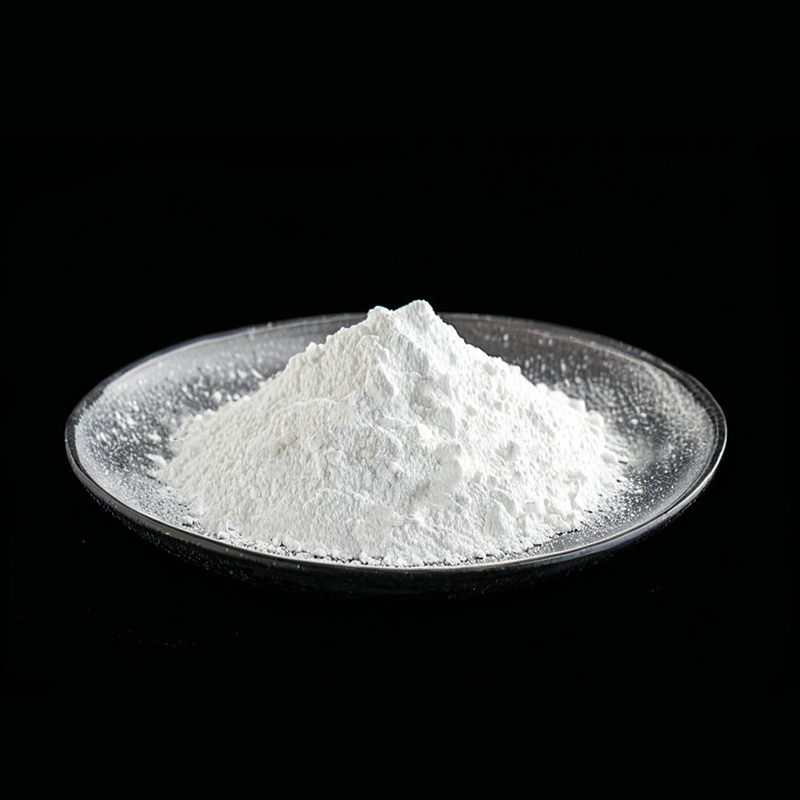
| Appearance | Off-white to light yellow free-flowing powder (low dust, easy to handle in automated feeding systems) |
| Particle Size | D50 ≈4–8 μm (optimized for uniform dispersion in polymer matrices) |
| Melting Point | ≈280℃ (range: 275–285℃, per ASTM D127) |
| Decomposition Temperature | >310℃ (5% weight loss temperature, per TGA at 10℃/min under N₂) |
| Bulk Density | ≈0.60 g/cm³ |
| Recommended Addition Level | 8–12% (UL94 V-0 in PC/ABS, PBT); 10–15% (UL94 V-0 in ABS, HIPS) |
| Compatible Polymers | PC, ABS, PC/ABS, PBT, PET, EPDM, HIPS |
| Processing Temperature Range | 240–300℃ (safe for most engineering plastic processing) |
| Compliance | Fully compliant with RoHS 2.0 (2011/65/EU), REACH SVHC (no listed substances), and California Proposition 65 |
| Toxicity | LD50 >6,000 mg/kg in oral rat tests |
In electronics, Brominated R-1025 is used in PC/ABS laptop housings, ABS smartphone chassis, and PBT connector housings. Its low addition level (8–10%) enables thin-walled designs (0.8–1.2mm thickness) while meeting UL94 V-0, critical for lightweight electronic devices. For example, 5G smartphone chassis with 9% Brominated R-1025 pass UL94 V-0 and retain structural integrity during drop tests, complying with consumer electronics safety standards (e.g., IEC 62368-1). In electrical appliances (refrigerators, air conditioners), it is added to ABS inner components (motor housings, control panels) to prevent fire spread from electrical faults.
Automotive manufacturers use Brominated R-1025 in PP/EPDM door panels, PC/ABS dashboard substrates, and PVC wire insulation. It meets automotive flame-retardant standards like FMVSS 302 (horizontal burn test), ensuring materials self-extinguish within 10 seconds of ignition. Its low migration prevents surface blooming on visible parts (e.g., dashboard), maintaining aesthetic appeal. For instance, PP/EPDM door panels with 12% Brominated R-1025 withstand high-temperature aging (80℃ for 1,000 hours) without losing flame retardancy, suitable for long-term automotive use.
In building materials, it is integrated into HIPS decorative panels, PVC ceiling tiles, and fiberglass-reinforced polyester (FRP) wallboards. Adding 10–15% Brominated R-1025 enables these materials to meet GB/T 8624-2012 (B1 grade, flame-retardant building materials), reducing fire risks in commercial buildings. For example, HIPS decorative panels with 12% Brominated R-1025 have a flame spread index <25 (per ASTM E84), complying with U.S. building codes for interior finishes.
In rubber and cables, it is used in EPDM rubber gaskets (for electrical enclosures) and PVC wire sheaths. Its compatibility with EPDM ensures gaskets retain flexibility (Shore A hardness ≈60) while achieving UL94 V-0. For PVC wire sheaths, adding 12–15% Brominated R-1025 meets UL 1581 (flame test for wires), preventing flame propagation along cables during fires—critical for data center and residential wiring systems.
It has a bromine content of ≈65%, achieving UL94 V-0 at 8–12% addition in engineering plastics.
It prevents surface blooming and retains flame-retardant efficacy for extended-service products (e.g., automotive parts).
Yes, it works with PC, ABS, PBT, PET, EPDM, and HIPS without additional compatibilizers.
Yes, it meets RoHS 2.0, REACH SVHC, and California Proposition 65, emitting less toxic smoke.


