



| Quantity: | |
|---|---|


QH8900S/8900SP is a series of high-efficiency halogen-free flame retardants specifically engineered for PA66 (Polyamide 66) resins—addressing the key challenge of balancing fire safety and mechanical performance in PA66, which is widely used in high-stress applications. Unlike generic halogen-free flame retardants that cause severe brittleness in PA66, this series (QH8900S: standard grade; QH8900SP: enhanced dispersion grade) delivers UL94 V-0 ratings at 18–22% addition (1.6mm thickness) while retaining >90% of PA66’s original tensile strength. It is 100% halogen-free (Cl <900 ppm, Br <900 ppm) and complies with global standards (IEC 61249-2-21, RoHS 2.0, REACH SVHC), making it ideal for PA66 components in electronics, automotive, and industrial machinery. With a decomposition temperature >330℃ (higher than PA66’s processing temp of 260–290℃) and optimized particle size, it ensures stable processing and uniform flame retardancy—critical for thin-walled PA66 parts (e.g., 0.8mm connectors).
Both QH8900S and QH8900SP are 100% halogen-free (total halogen ≤900 ppm, meeting IEC 61249-2-21), with no restricted heavy metals (Pb <1 ppm, Cd <1 ppm). They fully comply with RoHS 2.0 (2011/65/EU), REACH SVHC (no listed substances), and California Proposition 65—eliminating trade barriers for PA66 components exported to the EU, North America, and Japan. Unlike halogenated flame retardants, they emit <20 ppm toxic gases (e.g., HCN) during combustion (per ASTM D635-14), improving safety in enclosed spaces like automotive cabins and data centers.
Optimized for PA66’s crystallization and melt flow characteristics, the series achieves UL94 V-0 (1.6mm) at 18% addition (QH8900SP) and 22% addition (QH8900S)—outperforming generic aluminum hydroxide (requires 30–35% addition). Its phosphorus-nitrogen (P-N) synergistic mechanism targets PA66’s combustion behavior: phosphorus promotes char formation (condensed phase) to block heat/oxygen, while nitrogen releases inert gases (gas phase) to dilute flammable PA66 pyrolyzates. PA66 with 20% QH8900SP has a limiting oxygen index (LOI) of ≥33% (vs. 24% for pure PA66) and passes the UL 94 750℃ glow wire test (GWIT), suitable for high-voltage PA66 components like EV battery terminals.
The series’ microencapsulated P-N core and PA66-compatible surface treatment (QH8900SP uses a hyper-dispersant) minimize mechanical property loss. PA66 with 20% QH8900SP retains >92% tensile strength (≈85 MPa), >88% flexural strength (≈120 MPa), and >85% impact strength (≈6 kJ/m²)—critical for load-bearing PA66 parts like automotive engine brackets. QH8900S (standard grade) still retains >88% tensile strength, outperforming most halogen-free alternatives (which often reduce strength by 20%+). This mechanical retention eliminates the need for expensive PA66 modifiers, lowering overall formulation costs.
QH8900SP’s D50 particle size of ≈2–3 μm (vs. 5–6 μm for QH8900S) and hyper-dispersant coating ensure uniform dispersion in PA66 melts—eliminating agglomeration and surface defects (e.g., pinholes) in thin-walled parts. Both grades have a decomposition temperature >330℃, stable during PA66 processing (260–290℃) with no volatile byproducts. They do not cause PA66 hydrolysis or die buildup, reducing production downtime. For example, PA66 connector manufacturers using QH8900SP report a 15% reduction in scrap rates vs. generic flame retardants.
| Specification Items | Details (QH8900S) | Details (QH8900SP) |
| Chemical Composition | ||
| Type | Microencapsulated phosphorus-nitrogen (P-N) halogen-free flame retardant | Microencapsulated phosphorus-nitrogen (P-N) halogen-free flame retardant |
| Halogen Content | Cl < 900 ppm, Br < 900 ppm (total halogen ≤ 900 ppm) | Cl < 900 ppm, Br < 900 ppm (total halogen ≤ 900 ppm) |
| Phosphorus Content | ≈12% (by ICP-MS) | ≈13% (by ICP-MS) |
| Nitrogen Content | ≈8% (by elemental analysis) | ≈9% (by elemental analysis) |
| Surface Treatment | PA66-compatible silane | Hyper-dispersant |
| Physical & Thermal Properties | ||
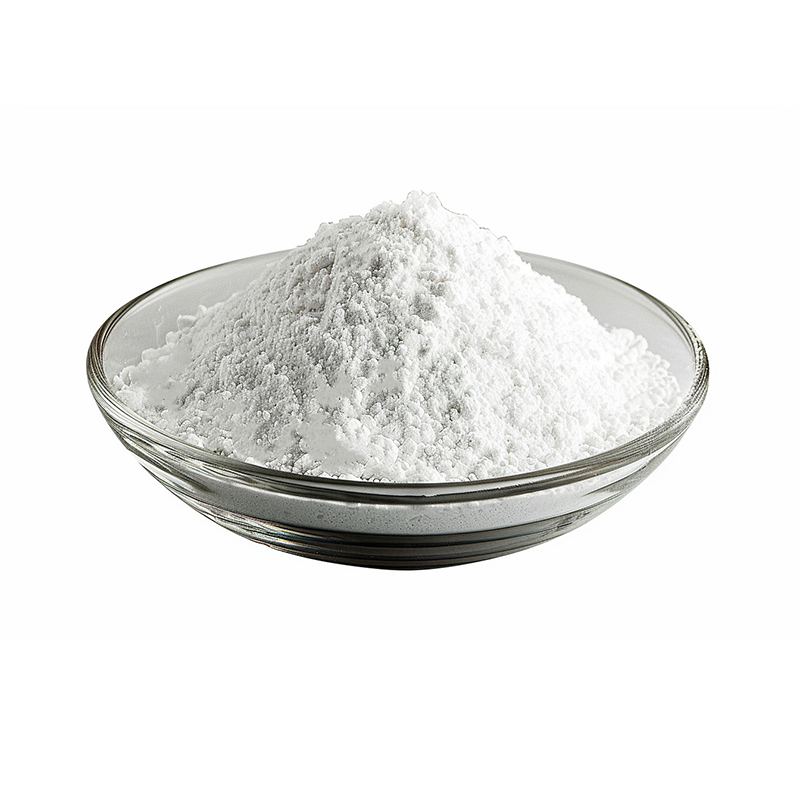
| Appearance | Off-white granular solid | White ultra-fine granular solid |
| Particle Size | D50≈5–6 μm (laser diffraction) | D50≈2–3 μm (laser diffraction) |
| Density | ≈1.48 g/cm³ | ≈1.45 g/cm³ |
| Decomposition Temperature | >330℃ (5% weight loss, TGA under N₂) | >330℃ (5% weight loss, TGA under N₂) |
| Moisture Content | <0.2% (23℃/60% RH, Karl Fischer) | <0.2% (23℃/60% RH, Karl Fischer) |
| LOI (PA66 + 20% addition) | ≥31% (ASTM D2863) | ≥33% (ASTM D2863) |
• Recommended Addition Level: 18–20% (QH8900SP, UL94 V-0 1.6mm); 20–22% (QH8900S, UL94 V-0 1.6mm)
• Compatible Resins: PA66, PA66/PA6 blends (up to 30% PA6)
• Processing Temperature: 260–290℃ (PA66 extrusion/injection molding)
• Additives: Compatible with PA66 heat stabilizers (e.g., copper halides) and UV stabilizers
QH8900S/8900SP is used in PA66 electronic components like EV battery terminals, PCB connectors, and sensor housings. PA66 battery terminals with 20% QH8900SP meet UL 94 V-0 and IEC 62133 (EV battery safety), withstanding 120℃ under-hood temperatures. PCB connectors (0.8mm thickness) use QH8900SP (18% addition) to achieve UL94 V-0 without brittleness, ensuring reliable mating cycles (≥10,000). For industrial sensor housings, QH8900S (22% addition) provides cost-effective flame retardancy while retaining impact resistance for harsh environments.
Automotive manufacturers use the series in PA66 engine brackets, wire harness clips, and door module components. PA66 engine brackets with 20% QH8900SP comply with FMVSS 302 and retain flexural strength (≈120 MPa) to support engine vibrations. Wire harness clips (PA66 + 21% QH8900S) resist 150℃ engine bay heat and meet automotive eco-standards (EU ELV Directive). Door module components use QH8900SP for thin-walled sections (1.0mm), ensuring flame safety and aesthetic appeal.
In industrial settings, it is used in PA66 conveyor chain links, pump impellers, and gear wheels. PA66 conveyor chain links with 22% QH8900S withstand 80℃ continuous operation and meet factory fire codes (GB 50016). Pump impellers (PA66 + 20% QH8900SP) retain impact strength (≈6 kJ/m²) to handle fluid pressure, while gear wheels maintain wear resistance (abrasion loss <0.1 mm³/1000 cycles)—critical for industrial machinery reliability.
For consumer goods like power tool housings and electrical switch components, QH8900S/8900SP provides flame safety and durability. PA66 power tool housings with 21% QH8900S meet IEC 60745 (power tool safety) and resist impact from drops (1.5m height). Electrical switches use QH8900SP (19% addition) for thin-walled buttons (1.2mm), ensuring UL94 V-0 and long-term tactile performance.
QH8900SP has a smaller particle size (D50≈2–3 μm) and hyper-dispersant coating for enhanced dispersion, while QH8900S is the standard grade.
QH8900SP requires 18–20% addition, and QH8900S requires 20–22% addition (1.6mm thickness).
Yes, its optimized particle size ensures uniform flame retardancy for thin-walled parts (e.g., 0.8mm connectors).
Yes, it meets the EU ELV Directive, making it ideal for automotive PA66 parts like engine brackets.


