



| Quantity: | |
|---|---|


Antimony Trioxide Replacement is an eco-friendly, non-antimony flame retardant synergist designed to replace traditional antimony trioxide (Sb₂O₃) in brominated flame retardant systems. Unlike Sb₂O₃ (a toxic heavy metal listed under REACH SVHC), this replacement is antimony-free (<5 ppm Sb) and complies with strict environmental regulations (EU RoHS 2.0, California Proposition 65). It enhances the flame-retardant efficiency of brominated additives via a unique synergistic mechanism—achieving UL94 V-0 ratings at 5–8% addition (vs. 8–12% for Sb₂O₃) in plastics like ABS, PC/ABS, and PVC. With a particle size of D50≈2–5 μm and high dispersion efficiency, it minimizes impact on material mechanical properties (retaining >95% tensile strength in PC/ABS). Its decomposition temperature >300℃ ensures stability during high-temperature processing, making it ideal for electronics, automotive, and building materials where eco-safety and fire performance coexist.
Antimony Trioxide Replacement contains <5 ppm antimony—far below REACH SVHC’s 1000 ppm limit for Sb₂O₃. It is free of other heavy metals (Pb <1 ppm, Cd <1 ppm) and complies with global eco-standards: EU RoHS 2.0 (2011/65/EU), California Proposition 65 (no listed carcinogens), and China GB/T 26572-2011. This compliance eliminates trade barriers for manufacturers exporting to the EU, North America, and Japan—critical for electronic and automotive industries. Unlike Sb₂O₃, it is not classified as a hazardous substance under GHS, reducing worker exposure risks and simplifying waste disposal.
This replacement exhibits a stronger synergistic effect with brominated flame retardants (BFRs) than Sb₂O₃. Its unique metal oxide composite structure (e.g., aluminum-magnesium-zinc oxides) catalyzes bromine radical release during combustion, accelerating flame suppression. In ABS blends with 10% Decabromodiphenyl Ethane, adding 6% of this replacement achieves UL94 V-0 (1.6mm)—vs. 10% Sb₂O₃ for the same rating. It also reduces the total flame retardant loading by 15–20%, lowering material costs and minimizing brittleness. For example, PC/ABS electronic housings with this replacement retain ≈28 kJ/m² impact strength (vs. 22 kJ/m² with Sb₂O₃).
With a particle size of D50≈2–5 μm (optimized via air jet milling) and surface treatment (silane coupling agent), Antimony Trioxide Replacement disperses uniformly in polymer matrices—eliminating agglomeration and weak spots. This uniform dispersion preserves material mechanical properties: PC/ABS blends with 7% replacement retain >95% tensile strength (≈65 MPa) and >90% elongation at break (≈50%) compared to pure PC/ABS. Unlike Sb₂O₃ (which causes significant impact loss), it is suitable for load-bearing components like automotive door panels and electronic connector housings.
Its decomposition temperature >300℃ and melting point >800℃ ensure stability during high-temperature polymer processing (240–320℃ for PC/ABS, PBT). It does not decompose or release volatile byproducts during extrusion or injection molding—protecting production equipment and ensuring consistent flame-retardant performance. It is compatible with all major brominated flame retardants (Decabromodiphenyl Ethane, Tetrabromophthalic Anhydride) and polymers (ABS, PC/ABS, PVC, PBT)—requiring no modifications to existing production lines. This compatibility simplifies adoption for manufacturers switching from Sb₂O₃.
| Category | Specification | Details |
| Chemical Composition | Main Components | Aluminum-magnesium-zinc oxide composite (antimony-free) |
| Antimony Content | <5 ppm (by ICP-MS) | |
| Heavy Metal Limits | Pb <1 ppm, Cd <1 ppm, Hg <1 ppm, Cr(VI) <1 ppm | |
| Surface Treatment | Silane coupling agent (≈1% by weight, for dispersion enhancement) | |
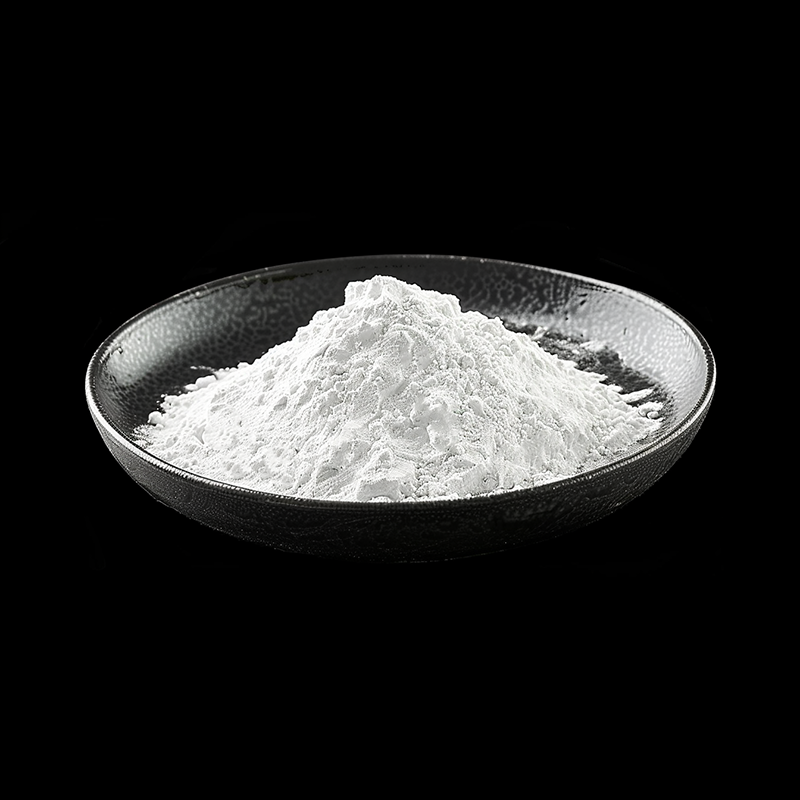
| Physical & Thermal Properties | Appearance | White powder (high whiteness, ≥95% per ASTM E313) |
| Particle Size | D50≈2–5 μm (by laser diffraction) | |
| Density | ≈2.8 g/cm³ | |
| Decomposition Temperature | >300℃ (5% weight loss, TGA under N₂ at 10℃/min) | |
| Moisture Content | <0.2% (23℃/60% RH, per Karl Fischer titration) | |
| Oil Absorption | ≈25 g/100 g | |
| Formulation Recommendations | Recommended Addition Level | 5–8% (with 8–12% brominated flame retardant, UL94 V-0 in ABS/PC/ABS) |
| Compatible Polymers | ABS, PC/ABS, PVC, PBT, PET, HIPS | |
| Processing Temperature Range | 240–320℃ (safe for most engineering plastic processing) | |
| Mixing Method | Direct blending with polymer resins and BFRs; no additional compatibilizers needed |
Antimony Trioxide Replacement is widely used in electronic plastics like ABS smartphone chassis, PC/ABS laptop housings, and PVC wire insulation. In ABS smartphone chassis with 10% Decabromodiphenyl Ethane and 6% replacement, it achieves UL94 V-0 (1.0mm thickness) and retains impact strength ≈25 kJ/m²—critical for drop resistance. For PC/ABS laptop housings, it meets IEC 60950-1 (electrical safety) and reduces total flame retardant loading by 18%, lowering weight by 5%. In PVC wire insulation, it enables compliance with UL 1581 (flame test) and reduces smoke emission by 40% compared to Sb₂O₃.
Automotive manufacturers use this replacement in PP/EPDM door panels, PC/ABS dashboard substrates, and TPO seat covers. In PP/EPDM door panels with 9% Ethylenebistetrabromophthalimide and 7% replacement, it complies with FMVSS 302 (horizontal burn test) and retains flexibility (Shore A hardness ≈60). For PC/ABS dashboards, it resists high-temperature aging (80℃ for 1,000 hours) without losing flame retardancy—suitable for long-term automotive use. Its low heavy metal content also meets automotive eco-standards (e.g., EU ELV Directive).
In building materials, it is integrated into HIPS decorative panels, PVC ceiling tiles, and FRP wallboards. HIPS decorative panels with 12% Tetrabromophthalic Anhydride and 8% replacement meet GB/T 8624-2012 (B1 grade) and have a flame spread index <25 (per ASTM E84)—complying with U.S. building codes. PVC ceiling tiles with this replacement reduce smoke density (Ds, max <150 per ASTM E662), improving evacuation safety during fires. Its compatibility with FRP resins also makes it suitable for building exterior cladding.
In wire & cable, it is used in XLPE (cross-linked polyethylene) insulation and PVC sheaths for power cables and communication cables. XLPE insulation with 10% brominated flame retardant and 7% replacement achieves UL 1581 (vertical flame test) and maintains electrical insulation (volume resistivity >10¹⁶ Ω·cm). For data center communication cables, it reduces toxic gas emission (HBr <20 ppm per ASTM D635-14), protecting sensitive equipment during fires. Its high thermal stability also withstands XLPE cross-linking temperatures (180–200℃).
Yes, it contains <5 ppm antimony, replacing toxic antimony trioxide (Sb₂O₃) in brominated systems.
It meets EU RoHS 2.0, California Proposition 65, and China GB/T 26572-2011.
5–8% addition (with 8–12% brominated flame retardants) achieves UL94 V-0 in ABS/PC/ABS.
Yes, PC/ABS blends retain >95% tensile strength, minimizing brittleness.


