



| Quantity: | |
|---|---|


2,2-Bis(bromomethyl)-1,3-propanediol (commonly called “TBBPA-free brominated diol”) is a reactive brominated flame retardant intermediate with two hydroxyl groups (-OH) and a bromine content of ≈60%. Unlike non-reactive brominated additives (e.g., decabromodiphenyl ethane), it covalently bonds with resin matrices (unsaturated polyester, polyurethane, epoxy) via its hydroxyl groups—ensuring permanent flame retardancy without migration or leaching. With a melting point of ≈110℃ and solubility in polar solvents (e.g., ethylene glycol, DMF), it integrates seamlessly into resin synthesis. Its decomposition temperature >280℃ maintains stability during resin curing (120–200℃), making it ideal for fiberglass-reinforced composites (FRP), flame-retardant polyurethanes, and epoxy coatings. Compliant with RoHS 2.0 and REACH SVHC (no TBBPA or PBDEs), it is widely used in marine, building, and automotive composites where long-term fire safety is critical.
The two hydroxyl groups (-OH) in 2,2-Bis(bromomethyl)-1,3-propanediol react with isocyanates (polyurethane), carboxyl groups (unsaturated polyester), or epoxides (epoxy resins)—forming covalent bonds with the resin backbone. This integration eliminates migration, blooming (surface whitening), or leaching—even after 1,000 hours of aging at 85℃/85% RH (ISO 815). For example, unsaturated polyester FRP synthesized with this diol retains UL94 V-0 rating after 500 hours of water immersion, outperforming FRP with additive flame retardants (which lose efficacy due to leaching). This permanence is critical for marine FRP (e.g., boat hulls) and outdoor building composites.
With a bromine content of ≈60%, this diol delivers powerful flame retardancy via gas-phase radical quenching. During combustion, bromine atoms release radicals that interrupt the combustion chain reaction, while the diol’s branched structure enhances char formation in the condensed phase. Unsaturated polyester FRP with 12% of this diol achieves UL94 V-0 (1.6mm) and reduces heat release rate (HRR) by 45% (per ISO 5660-1) vs. non-flame-retardant FRP. Polyurethane foam synthesized with this diol (10% addition) meets UL94 HF-1 and has a smoke density (Ds, max) of <100 (ASTM E662)—suitable for enclosed spaces like aircraft cabins.
With a purity of ≥99.0% (by HPLC), it minimizes impurities (e.g., monobromides <0.5%, water <0.1%) that disrupt resin curing. Its melting point of ≈110℃ allows molten-state mixing with resin monomers (e.g., ethylene glycol for unsaturated polyester), eliminating the need for solvents. It is soluble in polar solvents: ≈50 g/100 mL in ethylene glycol (20℃), ≈80 g/100 mL in DMF (20℃)—enabling flexible formulation for different resins. For example, in epoxy coatings, it dissolves in glycidyl ether monomers to form a homogeneous solution, ensuring uniform bromine distribution.
Compliant with RoHS 2.0 (no PBDEs, PBBs) and REACH SVHC (not listed), it contains no TBBPA (a controversial brominated flame retardant) or heavy metals. It exhibits low acute toxicity (LD50 >4,000 mg/kg in oral rat tests) and emits <35 ppm hydrogen bromide (HBr) during combustion (ASTM D635-14)—30% less than additive decabromodiphenyl oxide. This makes it safe for applications like children’s furniture FRP and food-contact polyurethane coatings (compliant with FDA 21 CFR Part 175.300 for specific grades).
• CAS Number: 3296-90-0
• Molecular Formula: C₅H₁₀Br₂O₂
• Molecular Weight: 261.94 g/mol
• Bromine Content: ≈60% (by weight, titration)
• Functional Groups: Two hydroxyl (-OH) groups (reactive sites for resin bonding)
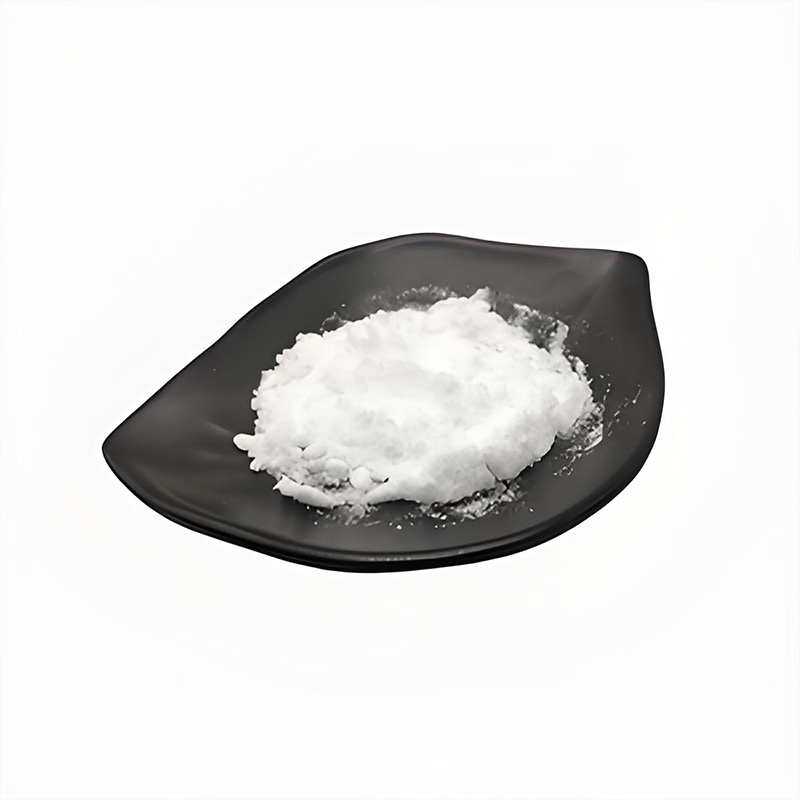
• Appearance: White crystalline solid (needle-like, no discoloration)
• Purity: ≥99.0% (HPLC, 254 nm detection)
• Melting Point: ≈110℃ (range: 108–112℃, ASTM D127)
• Decomposition Temperature: >280℃ (5% weight loss, TGA under N₂)
• Solubility: ≈50 g/100 mL in ethylene glycol (20℃), ≈80 g/100 mL in DMF (20℃), <1 g/100 mL in water (20℃)
• Particle Size: D50≈40–60 μm (easy to melt/dissolve in monomers)
• Moisture Content: <0.1% (23℃/60% RH, Karl Fischer)
• Recommended Addition Level: 10–12% (unsaturated polyester FRP, UL94 V-0); 8–10% (polyurethane foam, UL94 HF-1); 12–15% (epoxy coatings, UL94 V-0)
• Compatible Resins: Unsaturated polyester, polyurethane (flexible/rigid), epoxy, vinyl ester
• Processing Temperature: 90–130℃ (melting/dissolution); stable up to 200℃ during curing
This diol is a key intermediate in unsaturated polyester FRP for marine boat hulls, building wall panels, and electrical enclosures. FRP boat hulls with 12% of this diol meet IMO Resolution A.653(16) (maritime fire safety) and resist gasoline ignition—critical for offshore vessels. Building FRP panels (10% addition) achieve GB/T 8624-2012 (B1 grade) and withstand 1,000 hours of UV aging without losing flame retardancy. Electrical FRP enclosures (11% addition) provide UL94 V-0 protection and electrical insulation (volume resistivity >10¹⁴ Ω·cm), suitable for high-voltage equipment.
In polyurethane, it is used to synthesize flame-retardant polyols for rigid insulation foam (buildings/refrigeration) and flexible seat foam (automotive/aircraft). Rigid PU foam with 10% of this diol meets ASTM E84 (Class A fire rating) and has a thermal conductivity of ≈0.022 W/(m·K)—maintaining energy efficiency. Automotive flexible PU seat foam (8% addition) complies with FMVSS 302 and retains comfort (indentation force deflection ≈300 N) while preventing fire spread. Polyurethane elastomers (12% addition) for industrial rollers retain elasticity (Shore A hardness ≈70) and flame retardancy, suitable for factory conveyors.
Epoxy coatings for steel structures and PCB conformal coatings use this diol for flame retardancy. Steel structure coatings (15% addition) meet GB/T 14907-2018 (flame-retardant coatings) and protect against corrosion, with a pencil hardness of ≈2H. PCB conformal coatings (12% addition) achieve UL94 V-0 and resist 150℃ heat, ensuring electrical insulation for LED drivers. Epoxy adhesives (13% addition) for electronic bonding have a shear strength of ≈16 MPa (aluminum substrates) and meet IEC 60695-2-11 (glow wire test).
Vinyl ester composites (used in chemical storage tanks and corrosion-resistant pipes) benefit from this diol’s flame retardancy and chemical resistance. Chemical tanks with 14% of this diol withstand 98% sulfuric acid and meet UL94 V-0—suitable for pharmaceutical and petrochemical plants. Corrosion-resistant pipes (13% addition) comply with ISO 14692 (plastic pipes for offshore use) and retain structural integrity for 20 years, outperforming metal pipes in corrosive environments.


