



| Quantity: | |
|---|---|


Aluminum Diethyl Phosphinate (ADP) is a high-efficiency halogen-free flame retardant based on phosphorus (P) chemistry, designed for engineering plastics like PA6, PA66, PC, and PC/ABS. Unlike inorganic phosphorus flame retardants (e.g., red phosphorus), it is a white, low-dust solid with high phosphorus content (≈25%) and excellent dispersion—delivering UL94 V-0 ratings at 15–20% addition while retaining >90% of the base polymer’s mechanical properties. It is 100% halogen-free (Cl <500 ppm, Br <500 ppm) and complies with global standards (IEC 61249-2-21, RoHS 2.0, REACH SVHC), making it ideal for electronics, automotive, and medical device components. With a decomposition temperature >350℃ (higher than most engineering plastic processing temps) and low moisture absorption (<0.1%), it ensures stable processing and long-term performance—critical for precision parts like PCB connectors and EV battery components.
ADP is 100% halogen-free (total halogen ≤1,000 ppm) and has a phosphorus content of ≈25%—one of the highest among organic phosphorus flame retardants. Its flame-retardant mechanism is condensed-phase dominated: during combustion, it decomposes to form a glassy phosphate char layer that blocks heat, oxygen, and flammable volatiles. This mechanism is highly effective for polymers like PA6 and PC, which tend to melt and drip during combustion. PA6 with 18% ADP achieves UL94 V-0 (1.6mm) and has a LOI of ≥34% (vs. 24% for pure PA6), while PC with 20% ADP meets UL94 V-0 without dripping—solving PC’s common flame-retardant challenge.
ADP’s D50 particle size of ≈1–2 μm (air-jet milled) and hydrophobic surface treatment (silane coupling agent) ensure uniform dispersion in polymer melts—eliminating agglomeration and surface defects. It has minimal impact on mechanical properties:
• PA6 with 18% ADP retains >92% tensile strength (≈60 MPa) and >88% impact strength (≈5 kJ/m²).
• PC with 20% ADP maintains >90% tensile strength (≈65 MPa) and >85% elongation at break (≈100%).
• PC/ABS with 19% ADP retains >91% flexural strength (≈95 MPa).
Unlike red phosphorus (which requires encapsulation and causes brittleness), ADP’s organic structure interacts gently with polymer chains, preserving toughness—critical for load-bearing parts like automotive engine brackets.
With a decomposition temperature >350℃, ADP is stable during processing of high-temperature engineering plastics: PA6 (240–260℃), PA66 (260–290℃), PC (280–320℃). It does not decompose or release volatile byproducts (e.g., phosphine gas) below 350℃, protecting extrusion/injection molding equipment and ensuring worker safety. Its low moisture absorption (<0.1% at 23℃/60% RH) prevents hydrolysis of moisture-sensitive polymers like PA6, reducing production defects (e.g., bubble formation in PC). For example, PC extrusion lines using ADP experience no die buildup or yellowing, maintaining consistent part quality.
ADP reduces smoke and toxic gas emission during combustion—critical for enclosed spaces. PC with 20% ADP has a smoke density (Ds, max) of <80 (ASTM E662)—50% lower than halogenated flame retardants. It emits <10 ppm toxic gases (e.g., CO, HCN) during combustion (ASTM D635-14), complying with aerospace standards (FAR 25.853) for smoke toxicity. This makes it suitable for aircraft interior plastics (e.g., PC cabin panels) and EV battery enclosures, where smoke inhalation is a major safety risk.
| Category | Specifications |
| Chemical Identifiers | CAS Number: 225789-38-8 |
| Molecular Formula: Al(C₂H₅O₂P)₃ (Aluminum tris(diethyl phosphinate)) | |
| Molecular Weight: 354.15 g/mol | |
| Phosphorus Content: ≈25% (by weight, ICP-MS) | |
| Halogen Content: Cl <500 ppm, Br <500 ppm (total halogen ≤1,000 ppm) | |
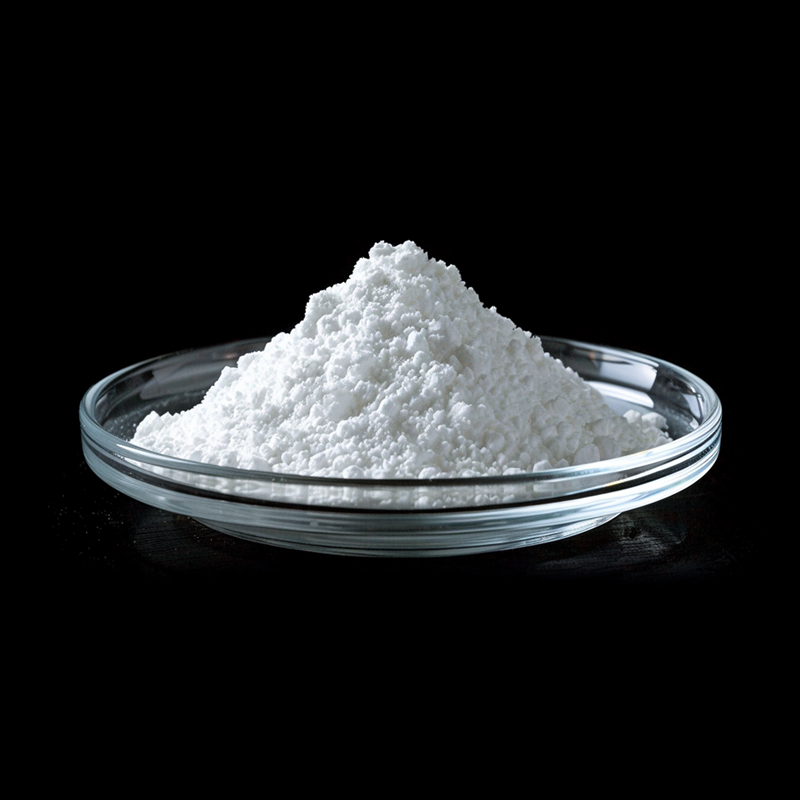
| Physical & Thermal Properties | Appearance: White ultra-fine powder (low dust, free-flowing) |
| Particle Size: D50≈1–2 μm (laser diffraction, air-jet milled) | |
| Density: ≈1.27 g/cm³ | |
| Decomposition Temperature: >350℃ (5% weight loss, TGA under N₂) | |
| Moisture Content: <0.1% (23℃/60% RH, Karl Fischer) | |
| Solubility: <0.1 g/100 mL in water (20℃); insoluble in organic solvents (ethanol, acetone) | |
| Flame Rating (1.6mm): UL94 V-0 (PA6: 18% addition; PC: 20% addition; PC/ABS: 19% addition) |
• Recommended Addition Level: 18–20% (PA6/PA66); 20–22% (PC); 19–21% (PC/ABS)
• Compatible Resins: PA6, PA66, PC, PC/ABS, PET, PBT
• Processing Temperature: 240–320℃ (extrusion/injection molding)
• Additives: Compatible with heat stabilizers (e.g., PA6 copper halides), UV stabilizers, and impact modifiers
ADP is used in PA6/PA66 electronic components like EV battery terminals, PCB connectors, and sensor housings. PA66 battery terminals with 20% ADP meet UL 94 V-0 and IEC 62133 (EV battery safety), withstanding 120℃ under-hood temperatures. PCB connectors (PA6 + 18% ADP) are thin-walled (0.8mm) and retain impact strength (≈5 kJ/m²) for reliable mating cycles. Sensor housings (PA66 + 19% ADP) comply with automotive eco-standards (EU ELV Directive) and resist chemical corrosion from engine fluids.
In automotive, it is used in PC cabin panels, PC/ABS dashboard substrates, and PC headlight lenses. PC cabin panels with 20% ADP meet FMVSS 302 and FAR 25.853 (low smoke), ensuring passenger safety during fires. PC/ABS dashboard substrates (19% ADP) retain flexural strength (≈95 MPa) to support airbags and meet automotive heat aging requirements (1,000 hours at 80℃). PC headlight lenses (22% ADP) retain >85% light transmittance (3mm thickness) and UL94 V-0, suitable for LED headlights.
Medical-grade ADP (compliant with ISO 10993-1) is used in PC/ABS ultrasound machine housings and PA6 surgical instrument trays. Ultrasound housings (PC/ABS + 20% ADP) meet UL94 V-0 and resist disinfectants (e.g., isopropyl alcohol), maintaining hygiene. PA6 surgical instrument trays (18% ADP) withstand autoclaving (121℃) without losing flame retardancy or mechanical strength, suitable for hospital sterilization cycles.
For industrial equipment, ADP is used in PC sight glasses (chemical tanks) and PA66 pump impellers. PC sight glasses (21% ADP) withstand 150℃ and corrosive chemicals (e.g., 50% sulfuric acid), allowing visual fluid monitoring. PA66 pump impellers (19% ADP) retain impact strength (≈5.5 kJ/m²) to handle fluid pressure, complying with industrial fire codes (GB 50016).
It has a high phosphorus content of ≈25%, delivering efficient condensed-phase flame retardancy.
It works with PA6, PA66, PC, PC/ABS, PET, and PBT for electronics, automotive, and medical applications.
Yes, it lowers smoke density by 50% and emits <10 ppm toxic gases during combustion, ideal for enclosed spaces.


